WHO We are
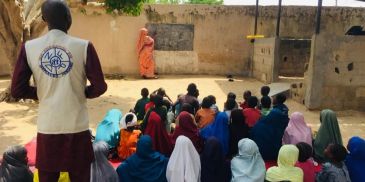
New Foundation for Displaced Persons (NFDP) is a woman led non-profitable and non-governmental organization (NGO) that helps displaced women and children that are affected by insurgency and crises to survive, recover and rebuild their lives. While ensuring that coping mechanisms are put in place to assist displaced people in sustaining their resilience.
NFDP is a non-profit organization operating under the Nigeria law, it varied greatly in its orientation and ideology embodied in its principles of transparency, impartiality, non-partisan, respect and non-discrimination. Our core values include compassion, integrity, diversity and teamwork. The organization is made up of a team of experts in responding to the humanitarian needs of the population in distress and are always open to support and collaborating with other actors in the cause of delivering aid whenever and wherever necessary.
NFDP is committed to immediate response of human need, supporting of vulnerable especially people living with disability. We use an approach that is local and global ensuring emergency, rehabilitation and development is properly implemented and sustainable even after the crises by involving the communities in building and developing a better society free from poverty.
We deliver lasting impact by providing Nutrition and health, WASH, Protection, Education, and Food security.
WHAT WE DO
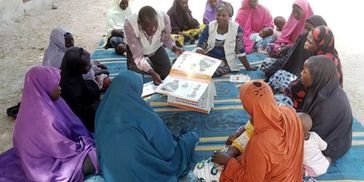
NFDP is committed to realizing the rights of Women and children to help them build a strong foundation and have the best chance of fulfilling their potential. Ensuring a balanced right amongst women and children in accessing Food security and good nutrition for pregnant, lactating mothers and children, with our emergency in Education activities, protection, and WASH programs, NFDP is working to transform the lives of the vulnerable in Northeast Nigeria, since 2023 to ensure the adaptation, integration, and protection of all women and children across its geographical areas of intervention.
EDUCATION IN EMERGENCY:
Quality education is the foundation to create sustainable development and improve the quality of life. NFDP is playing an active role in promoting lifelong quality education for all people –children, youth, and adults as a part of emergency response and for long-term recovery. We aim to develop an education system that is more resilient and responsive in the face of conflict, disaster and social unrest.
Challenges:
According to UNICEF report, only 61 percent of 6-11-year-olds regularly attend primary school and only 35.6 percent of children aged 36-59 months receive early childhood education. In the north of the country, the picture is even bleaker, with a net attendance rate of 53 percent. Getting out-of-school children back into education poses a massive challenge.
Gender, like geography and poverty, is an important factor in the pattern of educational marginalization. States in the north-east and north-west have female primary net attendance rates of 47.7 percent and 47.3 percent, respectively, meaning that more than half of the girls are not in school. The education deprivation in northern Nigeria is driven by various factors, including economic barriers and socio-cultural norms and practices that discourage attendance in formal education, especially for girls
Activities:
NFDP is strengthening education systems in ensuring life-saving messages do reach children and their families; To protects women and youth from attack, abuse and exploitation.
NFDP is establishing temporary learning space to teach and cater for out-of-school children as well as distribute learning materials to children to enable them to learn effectively.
NFDP also support peacebuilding initiatives in ensuring physical and psycho-social support is taken into consideration in achieving sustainable recovery.
NFDP is helping to cover the gap that was created during the prolonged crisis, by embracing adult education, both for women and men, to ensure sustainable integration and to build back better.
NFDP ensure protection is duly implemented in all her interventions on any displaced person especially, children and women who are usually victims of violence, abuse, force labor, discrimination and exploitation.
PROTECTION:
Identifying needs and providing access to reliable information on protection services and protection interventions for affected populations. To target people affected by natural or man-made hazards and who have been forced to flee their places of origin, relocating to other sites and people returning to their places of origin where basic services are limited or overstretched, possibly exacerbating inter- or intra-communal tensions and thereby increasing protection concerns.
Challenges:
As Women and children are majorly the most vulnerable in the event of any disaster, they are usually the victims of abuse and threat.
Activities:
NFDP ensure protection is duly implemented in all her interventions on any displaced person especially, children and women who are usually victims of violence, abuse, force labor, discrimination and exploitation.
NFDP uphold the human rights and the rule of law in our society, we agree that every child have potential and that needs to be nurtured, and women need to be protected/safeguarded.
NFDP Conducts community engagement activities and facilitate increased access to information on MHPSS, GBV, trafficking in persons, prevention of sexual exploitation and abuse (PSEA), as well as available services in the affected area.
NFDP Provides dignity kits to women and girls of reproductive age in vulnerable situations, including victims of trafficking and persons with disabilities. Dignity kits normally contain personal hygiene items, such as hand soap, bath soap, toothbrush, toothpaste, reusable menstrual pads, sanitizing wipes, shampoo, whistle.
NFDP is also contributing to rapid 3W/4W/5W assessments to identify existing specialized protection services (health and WASH) and other services for protection referrals in affected areas. Service mapping has also been used to strengthen and update existing referral mechanisms in targeted communities in coordination with relevant partners, or in locations where there are no existing pathways.
CHILD PROTECTION:
Many Nigerian children do face abuse every day. Six out of every 10 children experience some form of violence – one in four girls and 10 per cent of boys have been victims of sexual violence. Of the children who reported violence, fewer than five out of 100 received any form of support. The drivers of violence against children (VAC) are rooted in social norms, including around the use of violent discipline, violence against women and other community beliefs. All of which increases children’s vulnerability.
Challenge
According to UNICEF report: Nigeria has the largest number of child brides in Africa with more than 23 million girls and women who were married as children, most of them from poor and rural communities.
Just over one in four girls and women (27 per cent) aged 15-49 years have undergone female genital mutilation/cutting (FGM/C), a rate that is still lower in Nigeria than in many countries. However, due to its large population, Nigeria has the third highest absolute number of women and girls (19.9 million) who have undergone FGM/C worldwide.
Activities NFDP engages in the Strengthen of birth registration system to scale up the registration of children under five.
NFDP engages in child friendly activities, which provides access to mitigative and responsive services.
Safe drinking water, clean latrines, and good hygiene practice are essential towards achieving sustainable developments. As it enables people to cope with and recover from shocks and stress.
Challenges:
According to UNICEF report: Seventy-three per cent of the diarrhea and enteric disease burden is associated with poor access to adequate water, sanitation and hygiene (WASH), and is disproportionately borne by poorer children. Frequent episodes of WASH related ill-health in children, contribute to absenteeism in school, and malnutrition. Only 26.5 per cent of the population use improved drinking water sources and sanitation facilities. Also, 22 per cent of the population defecates in the open.
Activities:
NFDP is improving and enhancing Hygiene promotion and water Chlorination.
NFDP helps in the training and distribution of Hygiene kits across affected communities in Borno and Yobe State.
NFDP helps in the Care and maintenance of gender-sensitive, and disability-friendly sanitation facilities, including latrines desludging, solid waste management, drainage clearing, and implement sanitation measures specified by the Cholera response, prevention, and preparedness.
NUTRITION:
Challenge:
The insurgency in Nigeria has affected the States in Northeast, West and central massively. One in every five children is severely malnourished this is one of the major causes of death in under five children. Nigeria has recorded high level of Severe Acute Malnutrition SAM among children and women of childbearing age.
Activities:
NFDP seeks to reduce, support and partner with government and nutritional organization in active case finding, Maternal infant and young child nutrition (MICYN), Pregnant Breastfeeding Women and Girls (PBWG) and Tom brown intervention.
NFDP carries out general sensitization to mothers and caregivers on general hygiene, promote and encourage exclusive breastfeeding and total wellbeing of a child to prevent, sustain and reduce the problem of malnutrition.
FOOD SECURITY:
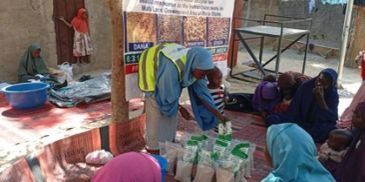
Sustainable livelihood is fundamental in our programmatic approach towards achieving the Sustainable Development Goal of No Poverty by giving our beneficiaries access to enough safe and nutritious food that meets dietary needs and food preference for a healthy life. About 10 million people are in the critical phases of food and nutrition insecurity, some vulnerable communities in Northern Nigeria are partly or completely inaccessible. The growing global population and climate change and rising cost of food has an uncertain impact on food. Therefore, strategic measures and response is essential in improving the living conditions of farmers and the rural population across the globe. NFDP is working on food security to support farmers and vulnerable people with resources, agricultural technologies, and other such means of building resilience. In fresh food distribution and distribution of seedlings for farmers.
LIVELIHOOD:
- Sustainable livelihood is fundamental in our programmatic approach towards achieving the Sustainable Development Goal of No poverty by giving our beneficiaries access to skill training. It is sustainable when it enables people to cope with and recover from shocks and stresses. NFDP aim to improve and enhance the livelihood of the affected persons.
Our Mission & Vision
Our Mission & Vision
MISSION:
To provide hope to society by prioritizing the needs of the vulnerable population, empowering them to survive and rebuild their lives.
VISION:
A world of justice, peace and equity where every individual lives a dignified life.
WHERE WE WORK
Our Mission & Vision
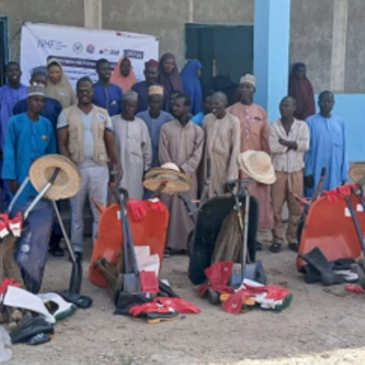
NFDP has been working in some areas across 2 states (Borno and Yobe) since the commencement of its activities. With sites across more than 5 LGAs. With 5 in Borno (MMC, Jere, Gubio, Mafa,Dikwa, and Konduga) And another 2 in Yobe state (Damaturu, and Busari). NFDP also plans to expand its activities in Tamua, Gujiba, Geidam and other areas in Katsina Zamfara, and Kaduna State.
Achievements In the year 2023, 2024, 2024, 2025 and Counting
Achievements In the year 2023, 2024, 2024, 2025 and Counting
Achievements In the year 2023, 2024, 2024, 2025 and Counting
- 1115 children were assisted in both Child Education.
- 520 women were assisted in adult Education.
- 6,310 beneficiaries were assisted in Nutrition activities.
- 520 beneficiaries assisted in child protection.
- 15,530 beneficiaries assisted with WASH activities.
- 125 beneficiaries assisted with food security and livelihood.
Certification and Registration Information:
Achievements In the year 2023, 2024, 2024, 2025 and Counting
Achievements In the year 2023, 2024, 2024, 2025 and Counting
- Corporate Affairs Commission: (CAC): 2023
- SCUML: 2023
- Federal Inland Revenue Services: 2023
- Borno State Humanitarian Coordination affairs: 2025
- Borno State network of civil society organization: 2023
- State Emergency Management Agency: 2023
- National Emergency Management Agency: 2023
- State Security Service.
- Yobe State Ministry of Youth and Sport.
- Yobe State Ministry of Water resources.
- Borno State Primary Health care 2025.